

Fertility Medications for IUI & IVF
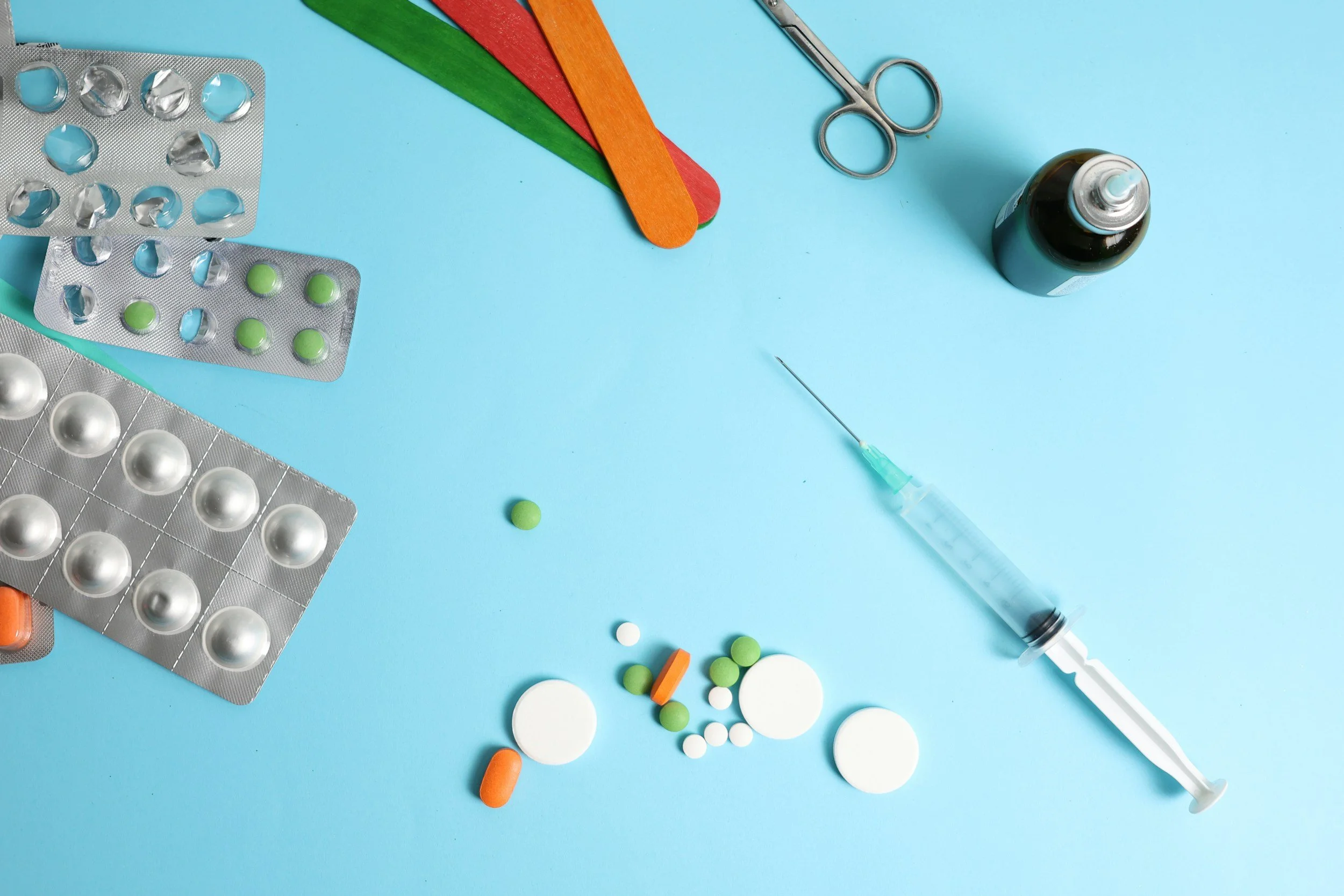
This blog is to help women beginning fertility treatment understand the rationale behind specific drug regimens.
Intrauterine insemination (IUI) and in vitro fertilization (IVF) have distinct objectives; consequently, their associated pharmacologic protocols differ substantially. IUI aims to provide a modest ovarian stimulation, whereas IVF requires complete exogenous control of the menstrual cycle.
Common Oral Medications for Ovulation Induction
Certain oral medications are utilized in both IUI and milder IVF protocols to stimulate follicular development.
Clomiphene citrate (Clomid): A selective estrogen receptor modulator that induces gonadotropin release by creating a state of relative hypoestrogenism in the brain. Although effective in inducing ovultion, in a minority of patients it may result in a endometrial thinning.
Letrozole (Femara): An aromatase inhibitor that reduces estrogen biosynthesis, thereby increasing endogenous follicle-stimulating hormone (FSH). It does not adversely affect endometrial thickness and is frequently preferred for patients with polycystic ovary syndrome (PCOS) and obesity.
Medication Protocol for IUI
In an IUI cycle, the goal is to achieve the development of one to three mature oocytes.
Typical Regimen:
Stimulation phase (cycle days 3–7): Oral clomiphene citrate or letrozole.
Adjunctive injectable gonadotropins (optional): Low-dose FSH preparations (e.g., follitropin alfa/beta [Gonal-F, Follistim] or human menopausal gonadotropin [Menopur]) may be added.
Ovulation trigger (cycle days 12–14): Human chorionic gonadotropin (hCG; e.g., Ovidrel, Pregnyl, Novarel). This agent mimics the luteinizing hormone (LH) surge, inducing final oocyte maturation and ovulation approximately 36 hours after administration.
IUI procedure: is performed prior to ovulation.
Luteal phase support (post-ovulation): Progesterone (oral, vaginal suppository, or intramuscular) is sometimes prescribed to enhance endometrial receptivity.
Overall intensity: Low; involves minimal injections and lower cost relative to IVF.
Medication Protocol for IVF
IVF is a controlled ovarian hyperstimulation procedure performed in conjunction with oocyte retrieval. The target is typically 10 to 20 mature oocytes. Endogenous ovulatory function is suppressed to allow precise control by the clinician.
Phases of the IVF Medication Regimen:
Phase 1: Pituitary Suppression
Prior to ovarian stimulation, spontaneous ovulation must be prevented.
Oral contraceptives or estrogen may be used to quiet the ovaries and reduce the risk of functional cysts.
Gonadotropin-releasing hormone (GnRH) antagonists (e.g., cetrorelix, ganirelix) or GnRH agonists (e.g., leuprolide acetate [Lupron]) are administered to block the premature LH surge, which would otherwise compromise the cycle.
Phase 2: Ovarian Stimulation
Daily subcutaneous injections are administered for 8 to 12 days.
FSH preparations (Follistim, Gonal-F): Primary agents for follicular recruitment and growth.
LH-active agents (Menopur, low-dose hCG): Provide supporting hormonal activity to optimize oocyte quality.
Monitoring: Serial transvaginal ultrasonography and serum estradiol measurements are performed, often on a daily basis.
Phase 3: Final Oocyte Maturation (Trigger)
Timing is critical, with administration scheduled precisely 35 hours prior to oocyte retrieval.
Dual trigger (low-dose hCG plus GnRH agonist): Used to reduce the risk of ovarian hyperstimulation syndrome (OHSS).
hCG-only trigger (Pregnyl, Novarel): Employed when OHSS risk is low.
Phase 4: Luteal Phase Support for Embryo Transfer
Following oocyte retrieval, fertilization, and embryo development, the endometrium must be prepared for implantation.
Progesterone in oil (PIO): Administered as daily intramuscular injections, typically continued for approximately 10 weeks of gestation. This is considered essential for successful embryo transfer.
Estrogen (patches or oral formulations): Used to build and maintain adequate endometrial thickness.
Overall intensity: High; requires multiple daily injections, frequent clinic visits, and substantial time commitment.
Ancillary Medications
Regardless of the specific treatment pathway, patients may be prescribed additional supportive agents:
Antibiotics (e.g., doxycycline, azithromycin): Administered for 3–5 days prior to oocyte retrieval to reduce infection risk.
Corticosteroids (e.g., methylprednisolone, dexamethasone): Often started before the embryo transfer to modulate maternal immune response.
Low-dose aspirin: Occasionally prescribed to improve uterine blood flow.
Common Adverse Effects
Most fertility medications elevate serum estradiol to supraphysiologic levels, resulting in predictable side effects:
Abdominal bloating and fullness: Often pronounced near the time of oocyte retrieval.
Mood alterations: The hormonal decline following retrieval (the "post-hCG crash") may be more challenging for some patients than the stimulation phase itself.
Headaches: Frequently reported with estrogen supplementation and GnRH agonists.
Bruising and Pain: at medication injection sites.
Summary
For IUI: The medication regimen typically consists of oral induction agents, a single trigger injection, and possibly low-dose gonadotropin boosters. This represents a limited pharmacologic intervention.
For IVF: A comprehensive regimen is required, including pituitary suppression agents, daily stimulation injections, a precisely timed trigger, and extended luteal phase support with progesterone and estrogen.
It is important to recognize that treatment protocols are highly individualized. A regimen that is appropriate for one patient may differ substantially from that of another, based on diagnosis, age, ovarian reserve, and laboratory parameters. Patients receive a detailed treatment calendar and a medication teaching from their clinical team prior to initiating therapy.
Disclaimer: This content is for informational and educational purposes only and does not constitute medical advice. Patients should consult their physician for a treatment plan specific to their medical situation.